
Is Braiding Hair Toxic?
Short answer: not all braiding hair is the same. Recent independent testing raised real questions about some synthetic braiding hair, and made it clear why materials matter. Here is what was found, what makes braiding hair safer, and where EZBRAID stands.
Last updated: October 2026
What our commissioned FITI test found
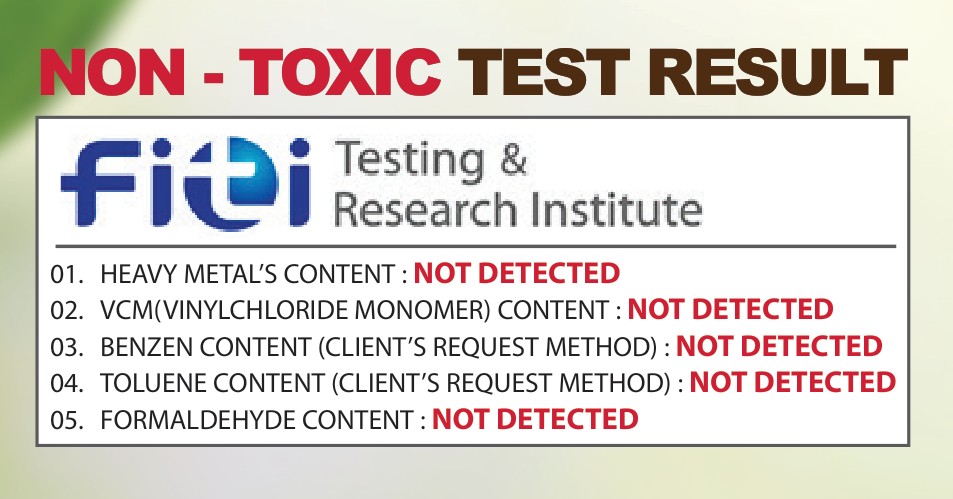
We commissioned the FITI Testing & Research Institute to test EZBRAID fiber. On the substances it screened, heavy metals, VCM (vinyl chloride monomer), benzene, toluene, and formaldehyde, FITI reported none detected. That is our own commissioned report on our own fiber, and any single test speaks only to what it screened for. Consumer Reports tested an EZBRAID product by name in late 2025 and reported detectable heavy metals in February 2026; we publish every result side by side on our complete lab panel.
The concern is real, and it is about materials
In late 2025, independent testing of braiding hair — including testing Consumer Reports reported in February 2026 — drew attention to chemicals found in some synthetic braiding-hair products on the market. The findings reported across these sources have included substances such as:
The important takeaway is not that all braiding hair is unsafe. It is that what a product is made from matters. Washing braiding hair may remove some surface residue, but it does not change the underlying composition of the fiber. That is why careful material selection has to come first.
What makes braiding hair safer
PVC-free materials
Look for hair that is genuinely PVC-free and free of acrylonitrile, made from materials chosen for safety, not just finished to look clean.
Antibacterial fiber
An antibacterial fiber helps reduce the scalp irritation and itching that drive many reactions, especially on sensitive scalps and for kids.
Materials first, not a rinse
If a product needs a vinegar soak or pre-wash to feel clean, that is a sign the material itself is the issue. Hair made from well-chosen materials should not need washing before use.
What EZBRAID is made from
EZBRAID is a pre-stretched, itch-free braiding hair, made by I&I Hair Corporation. Here is what it is made from:
- PVC-free: no polyvinyl chloride, no acrylonitrile.
- Named materials: made with PP (polypropylene) and PET (polyethylene terephthalate), materials widely used in consumer, medical, and food-contact applications.
- Antibacterial SPETRA fiber: a zinc-sulfide layer built into the fiber helps it resist odor-causing bacteria.
- Not modacrylic: a PP and PET base, so no acrylonitrile.
- Pre-stretched & itch-free: designed so that no pre-rinse is required before use.
Our mission is to provide braiding hair that prioritizes the safety and well-being of both braiders and the people who wear it. I&I Hair Corporation
The numbers, in plain language
EZBRAID does not just say "lab-tested." Here is what testing has found so far, stated plainly:
Consumer Reports tested an EZBRAID product by name in late 2025 and reported detectable heavy metals in its February 2026 report. We publish the full result, with context, on our complete lab panel.
“We do not intentionally add lead, arsenic, cadmium, or other heavy metals in production.” I&I Hair Corporation, statement to Consumer Reports, February 2026
We are expanding independent U.S. third-party testing of finished products. That testing is in progress, and we will share results rather than a single flattering number.
EZBRAID is built on our own SPETRA fiber. A zinc-sulfide layer built into the filament helps it resist odor-causing bacteria, the documented basis for reduced first-week itch, distinct from any safety claim.
Sources: Consumer Reports braiding-hair investigation, published February 24, 2026; FITI Testing & Research Institute reports.
Braiding hair safety, answered
Is braiding hair toxic?
How do you choose safer braiding hair?
Does braiding hair need to be washed before use?
Is EZBRAID a good pick for kids and sensitive scalps?
Make the switch to EZBRAID
Explore the EZBRAID range, or read more on the journal about braiding-hair materials and the science behind SPETRA fiber.